Charleston with the Ewings
Charleston is one of those extraordinary cities soaked in history. But as with many historic places, if you simply walk the streets without knowing, asking, or researching, you may see a great deal and still understand very little. History is often right in front of your face, and unless you have the curiosity to look deeper, much of it goes unnoticed.
It helps immensely to have a guide. For us, that guide was Jaime Ewing. Jaime is a son of the South. Born and raised in Charleston, yet educated at Yale in the North. His love of history is matched only by his devotion to his beloved city.
As we arrived in Charleston Harbor, we were immediately confronted by history. Fort Sumter on our port side and Fort Moultrie to starboard on Sullivan’s Island. Above Fort Sumter, a massive American flag flies from an equally massive flagpole, a clear signal that something profoundly important lies beneath. Across the harbor at Fort Moultrie, patriots once held off the Royal Navy during the American Revolution. Though the defenses initially succeeded, the British eventually outmaneuvered them by slipping up the narrow Stono River and flanking the city in the summer of 1779.
We settled in at the Carolina Yacht Club docks, giving both the boat and ourselves a much-needed washdown and rest.
War has never been a stranger to Charleston. During the Revolutionary War, the British laid siege to the city. While the Patriots successfully blocked a direct naval assault, they were ultimately outflanked via the Stono River. Decades later, war returned again during the Civil War, leaving another indelible mark on the city.
Charleston’s architecture and layout are remarkable. The old and the new woven together seamlessly. The city is famous for its “single houses,” designed with long side porches, or piazzas, that face south and west to catch cooling ocean breezes while shading against the harsh eastern sun. Street-facing walls often have doors that appear to be front entrances, but instead open into private courtyards hidden from view.
One fascinating detail is that Charleston is one of the few walled cities, or enceintes, in North America. A defensive wall was erected around the city in 1704. We know this because Jaime, equal parts Smithsonian docent and Cliff Clavin, casually pointed out mid-walk, that we were standing precisely where the wall once stood.
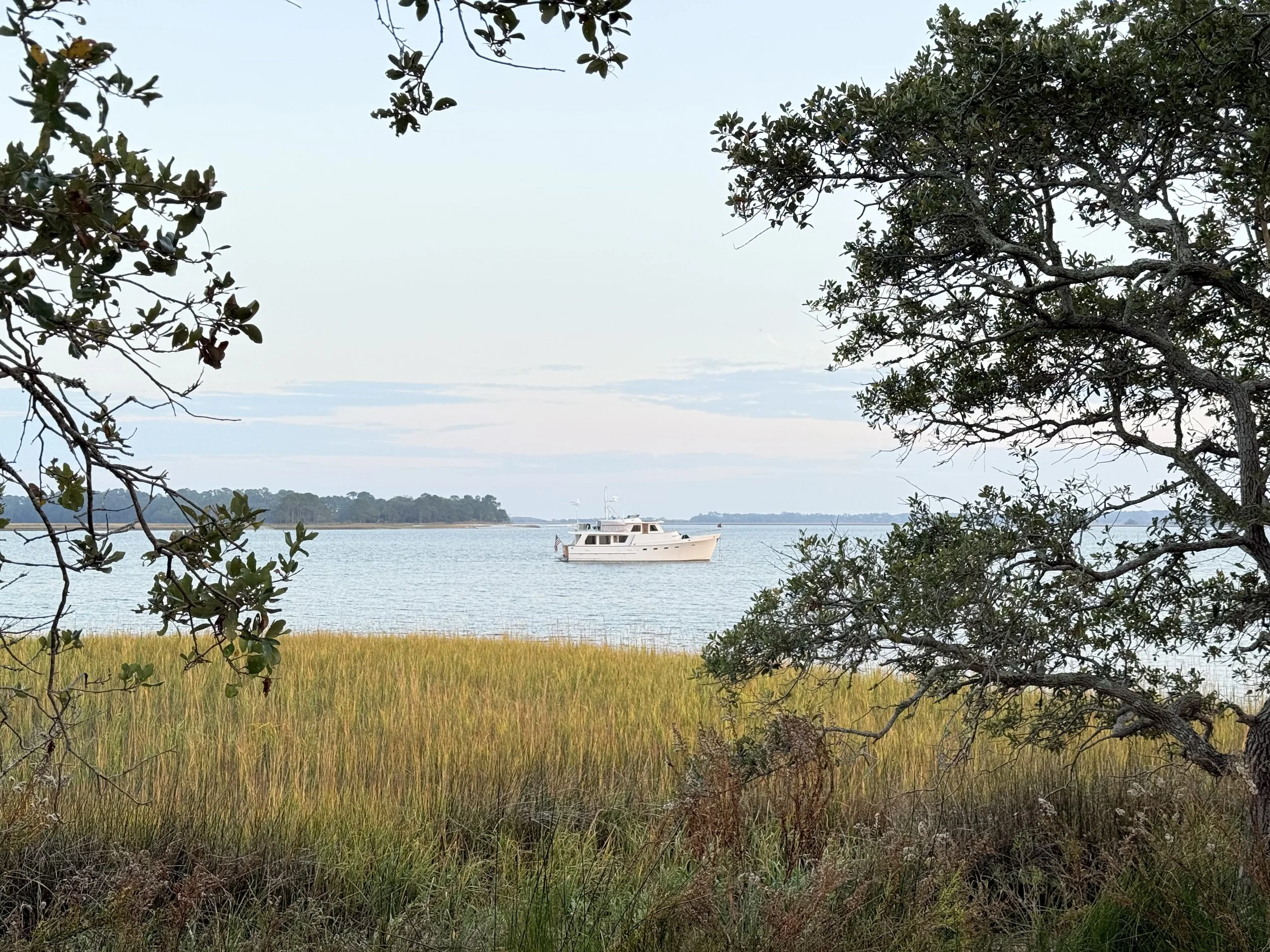
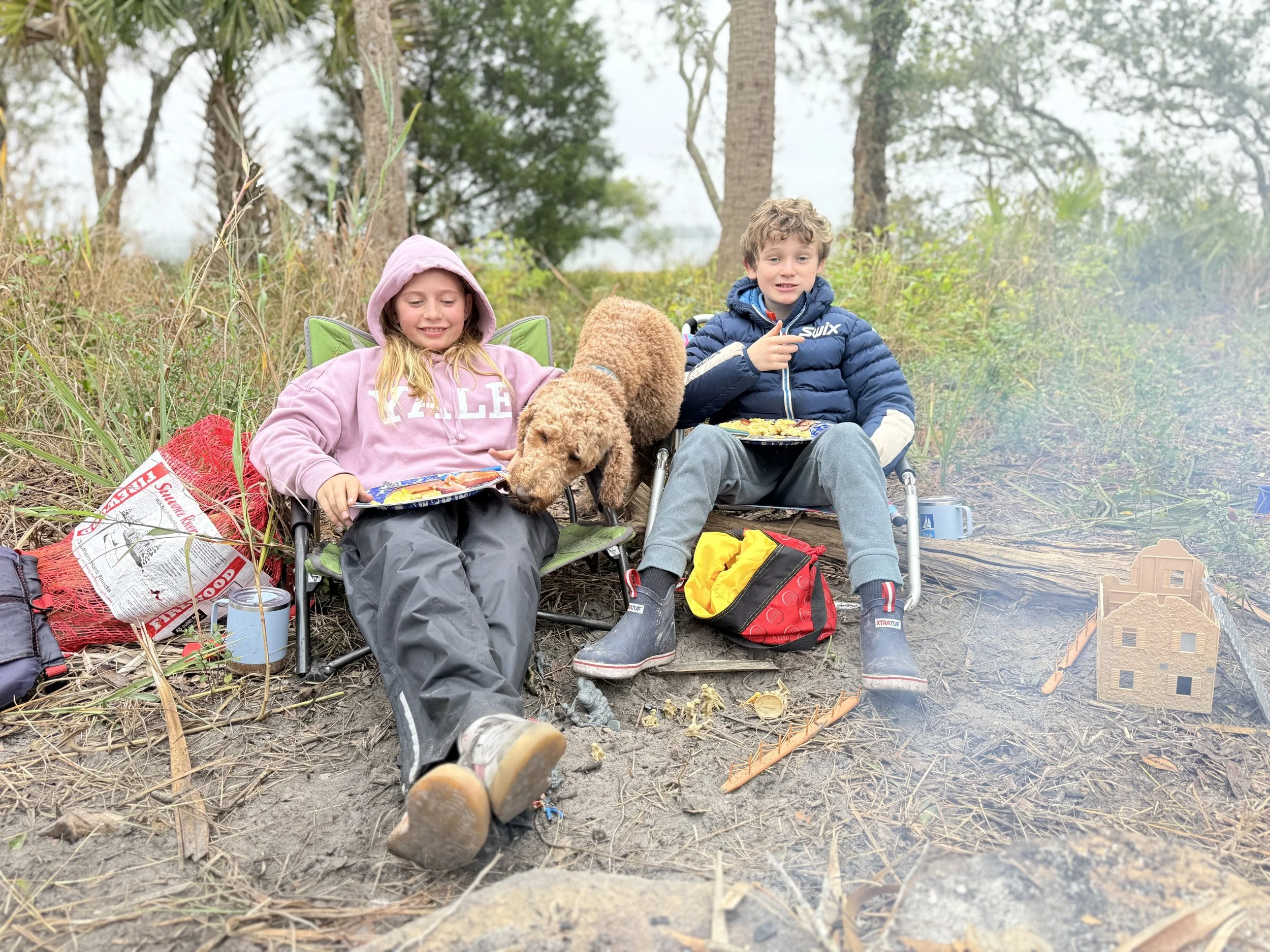
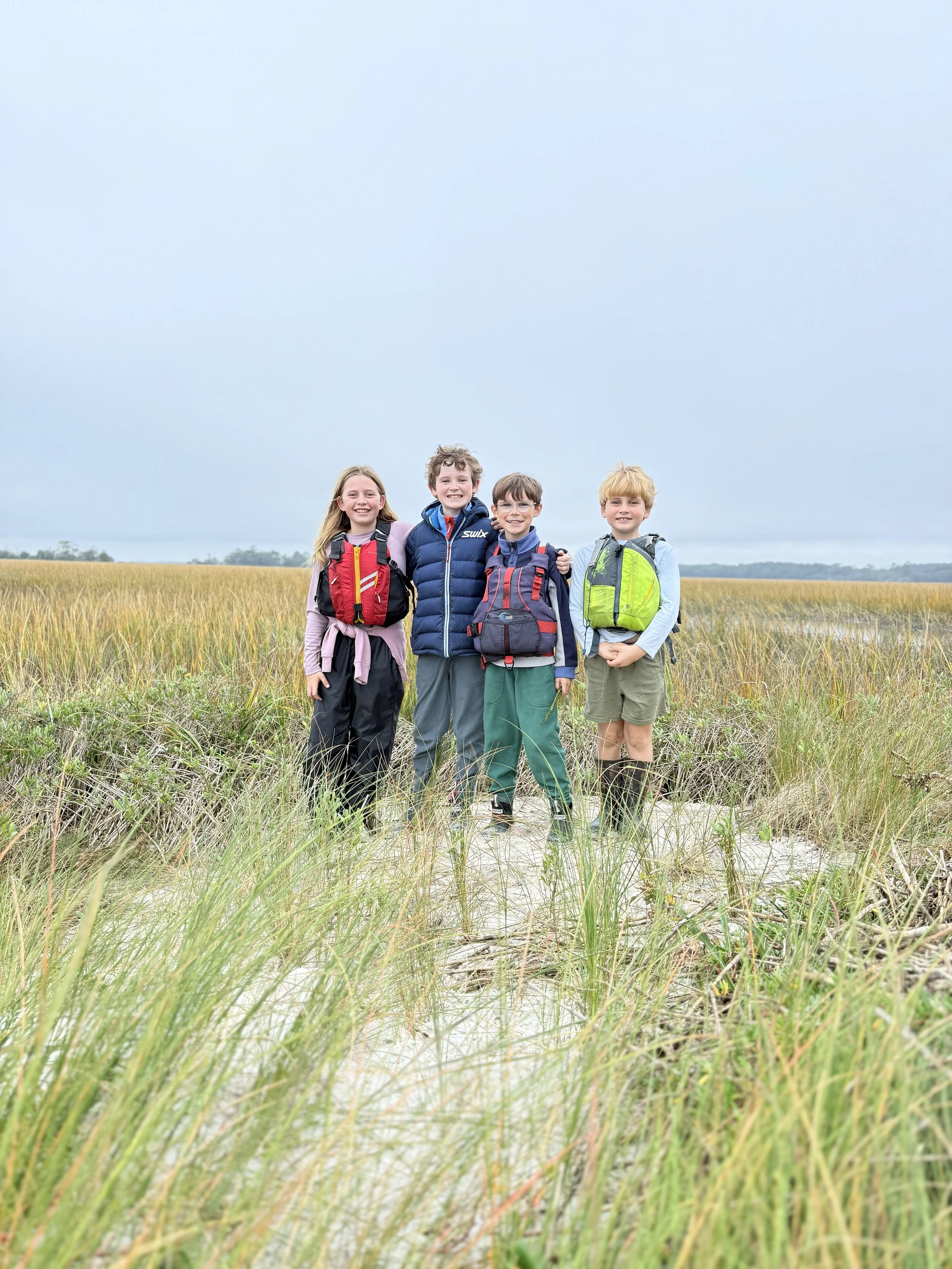
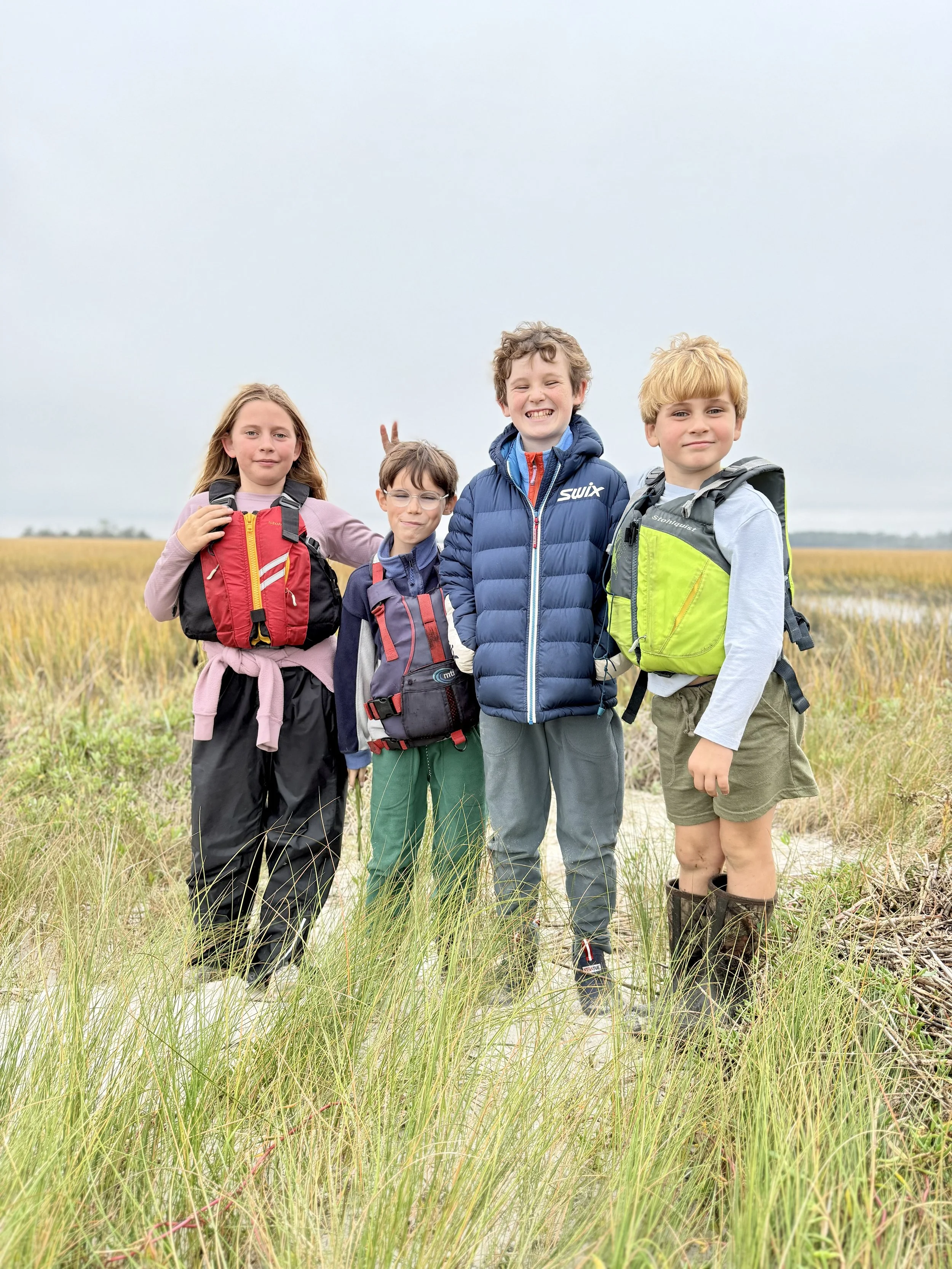
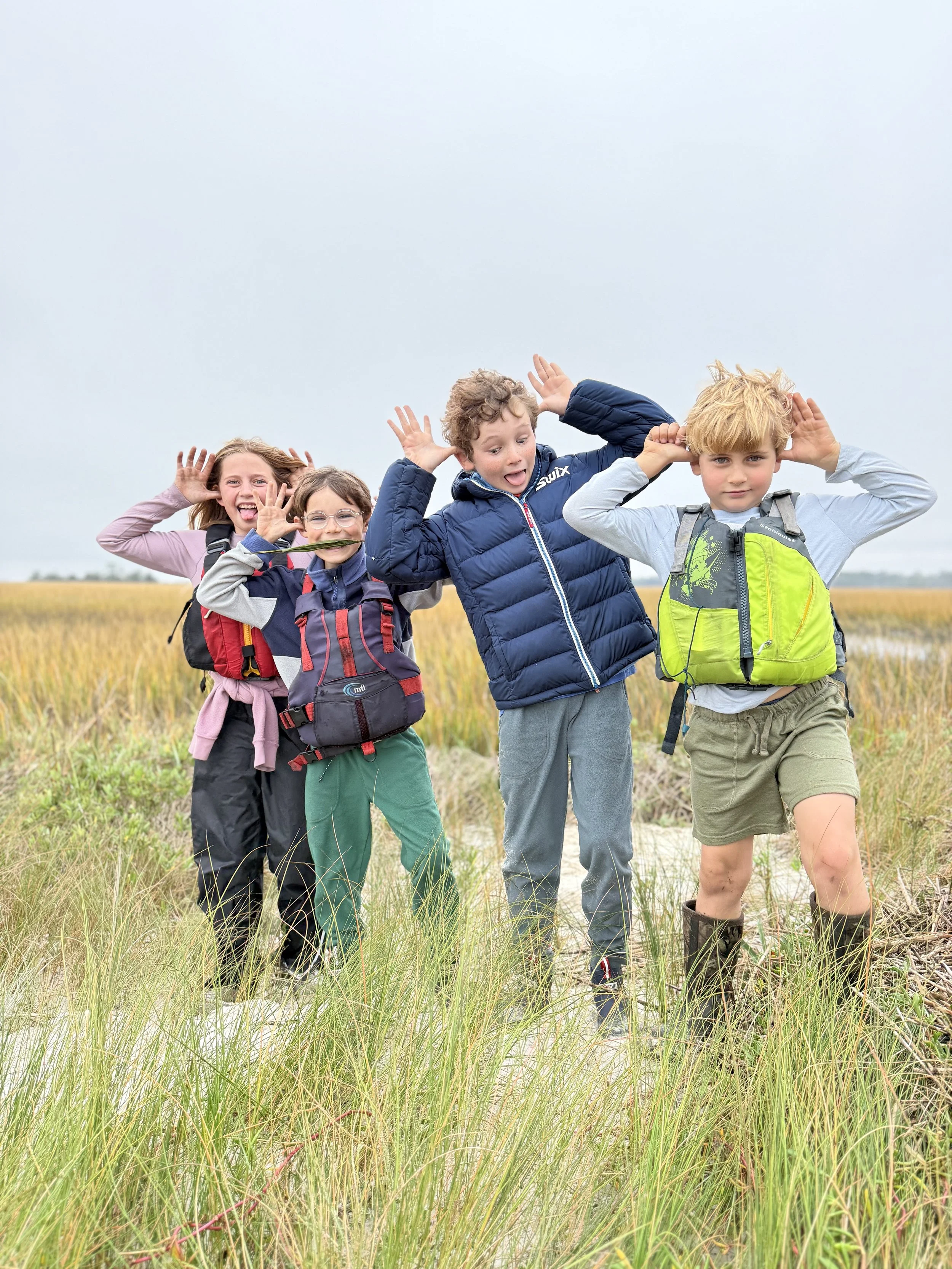
Our time in Charleston was limited by a tight schedule and some necessary repairs, but we did carve out time for a special trip down the Stono River with the Ewings and their children to a place called Cook’s Kitchen. Through some impressive legal sleuthing, a relative of the Ewing family discovered a small island that had never been granted by royal charter nor claimed by deed. After more than thirty years of posting and maintaining the land, they acquired ownership through adverse possession. The island is breathtaking. A pristine overlook of marshland that feels utterly removed from time.
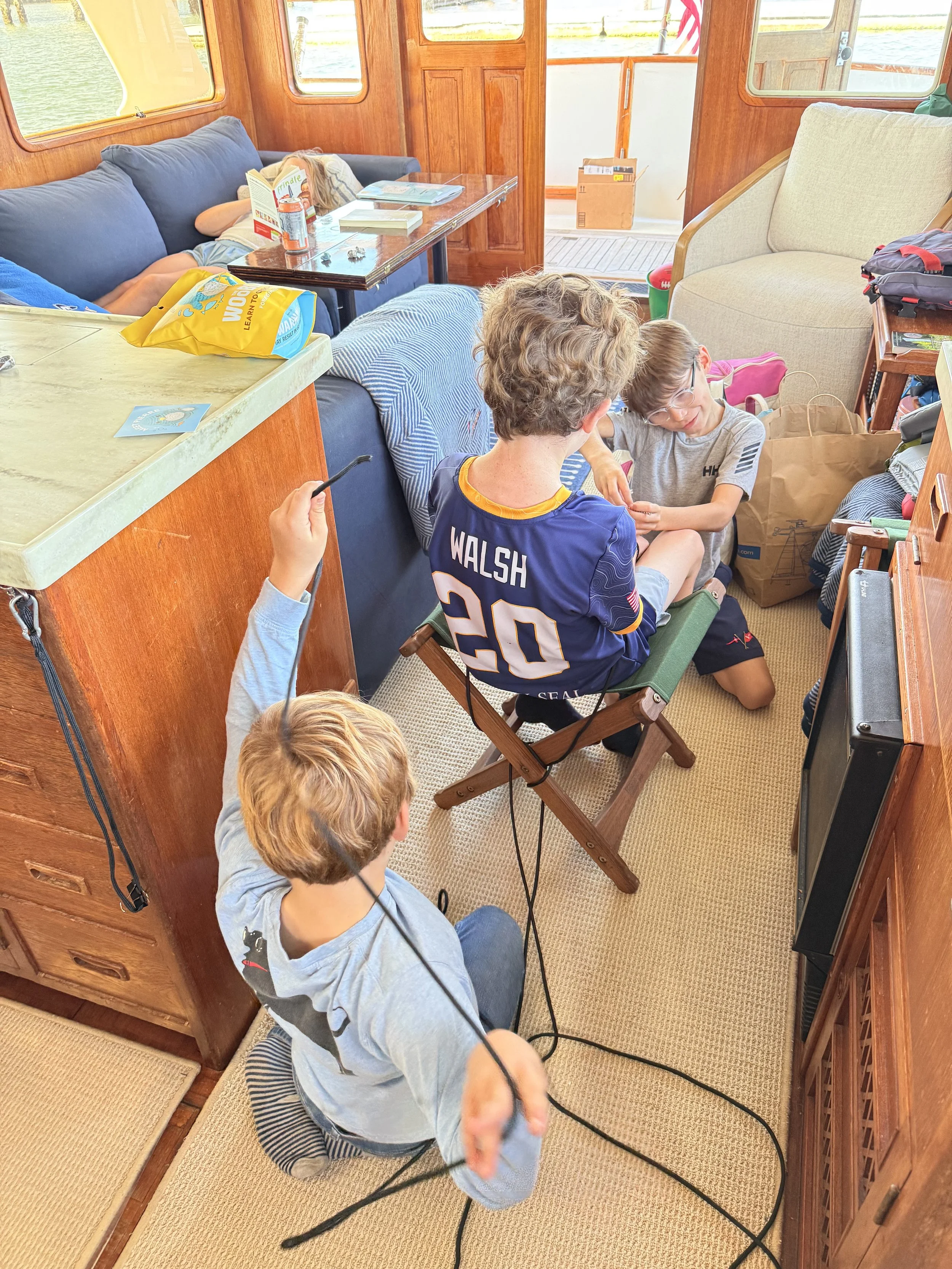
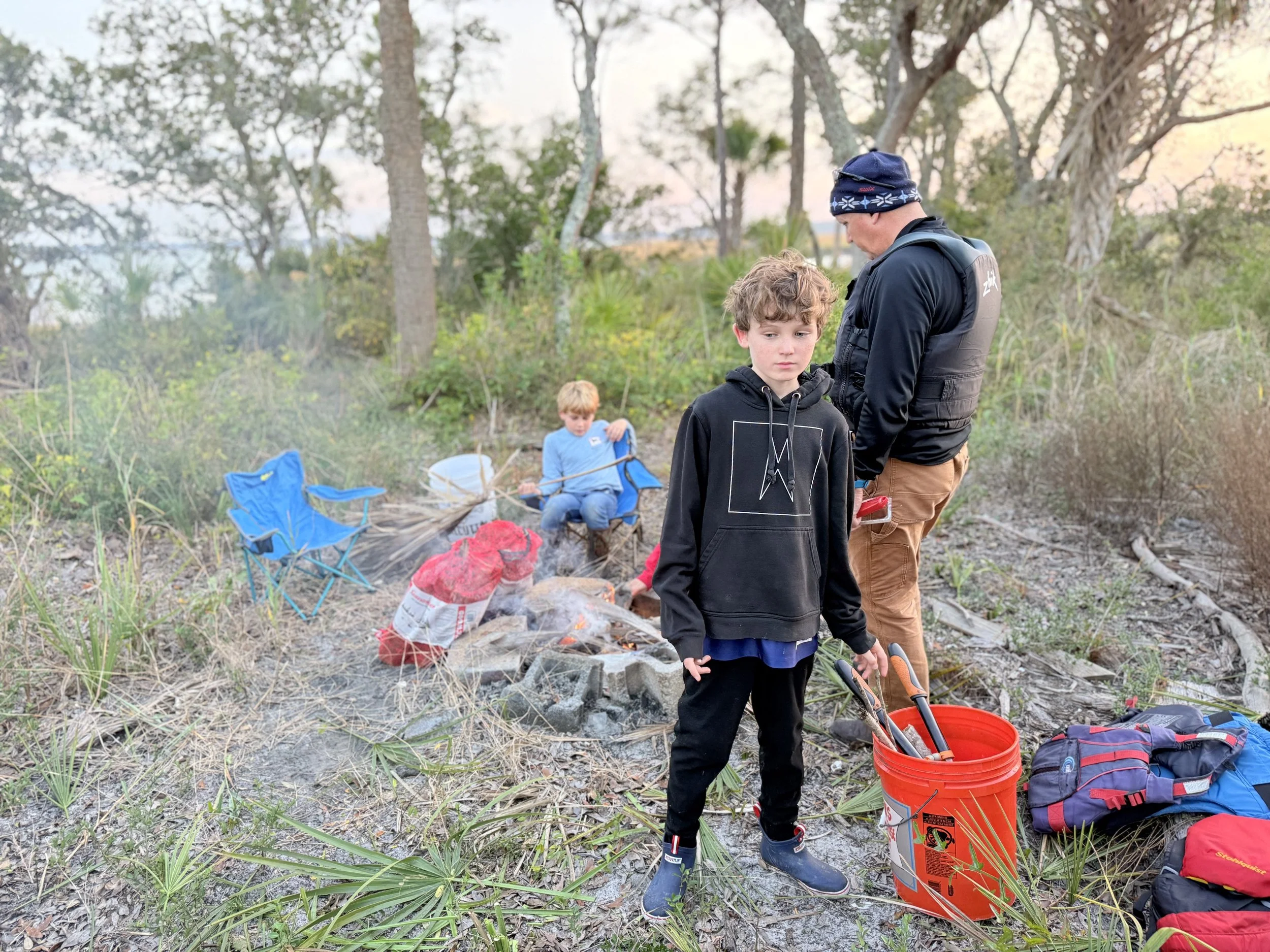
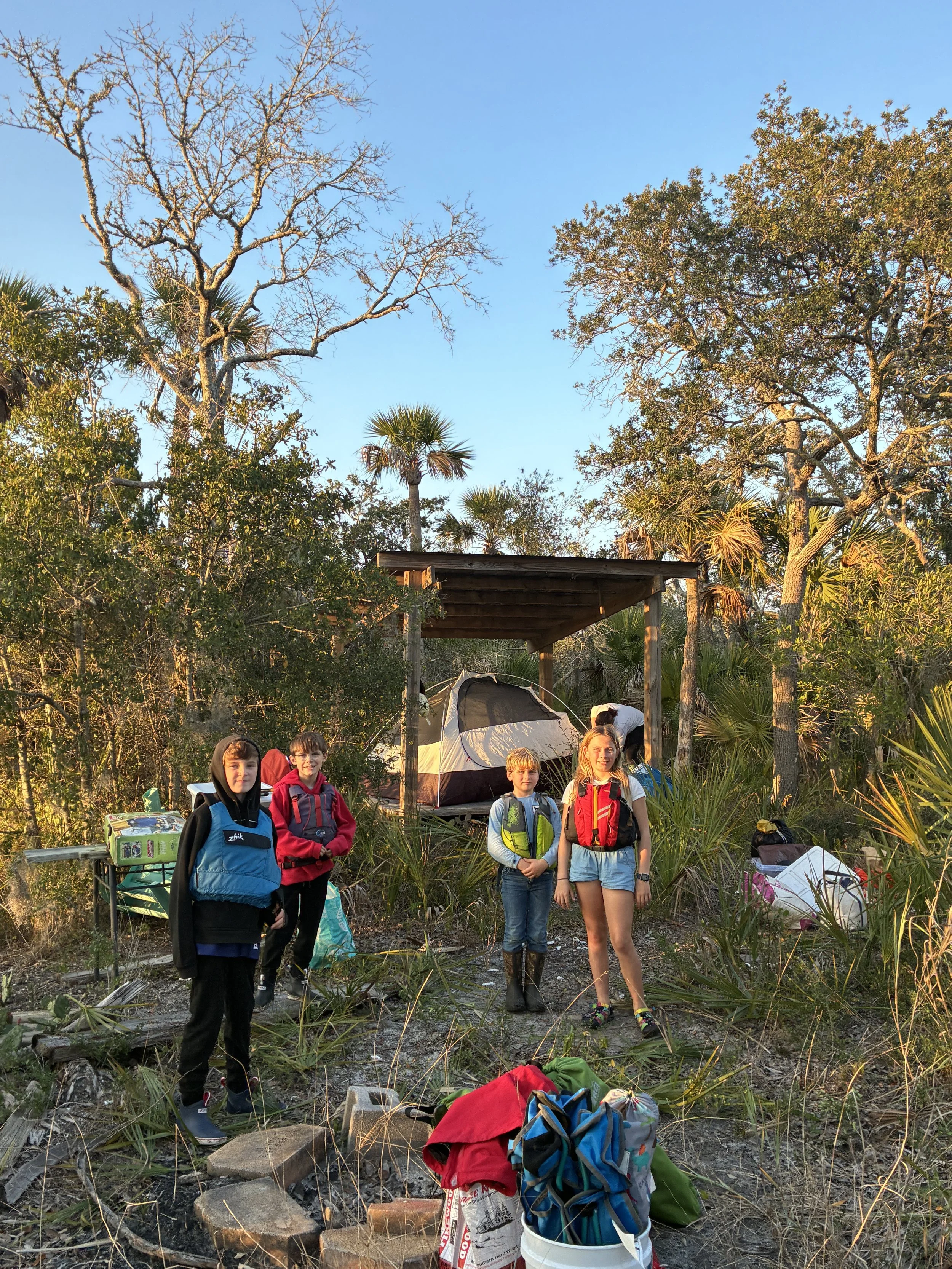
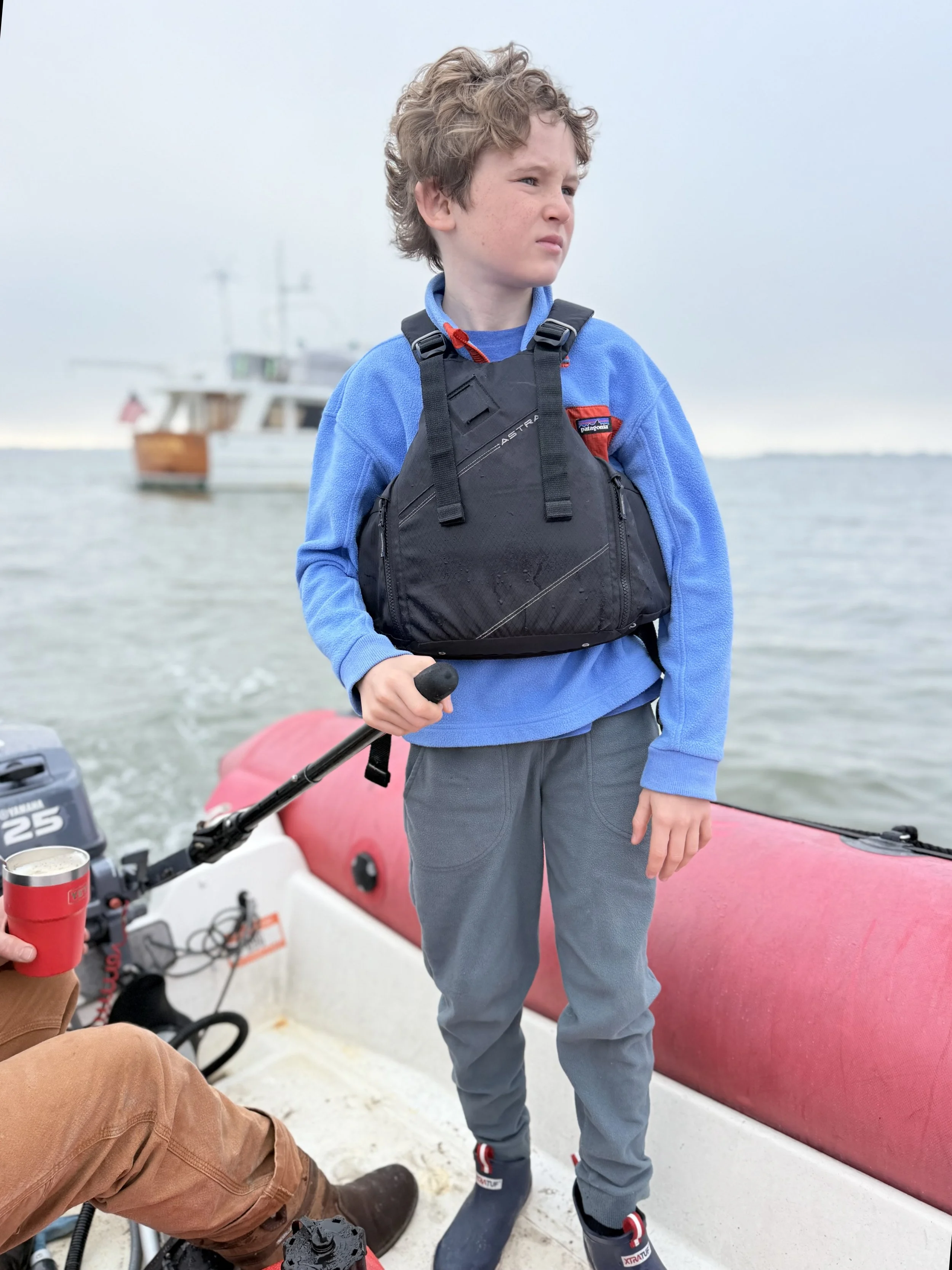
The Ewing kids, Walker and Jay, joined Ben, Theo, Lauren, and me as we traveled down the same river the British had crept up 246 years earlier during the Battle of Stono Ferry. As we motored slowly toward this special place, much to our chagrin, the children retreated to the main salon and became inexplicably enthralled with creating an effigy and reenacting the demise of fellow Yalie Nathan Hale. Meanwhile, Jaime and his wife, Dr. Sarah, sped past us in their much quicker center console to begin setting up camp.
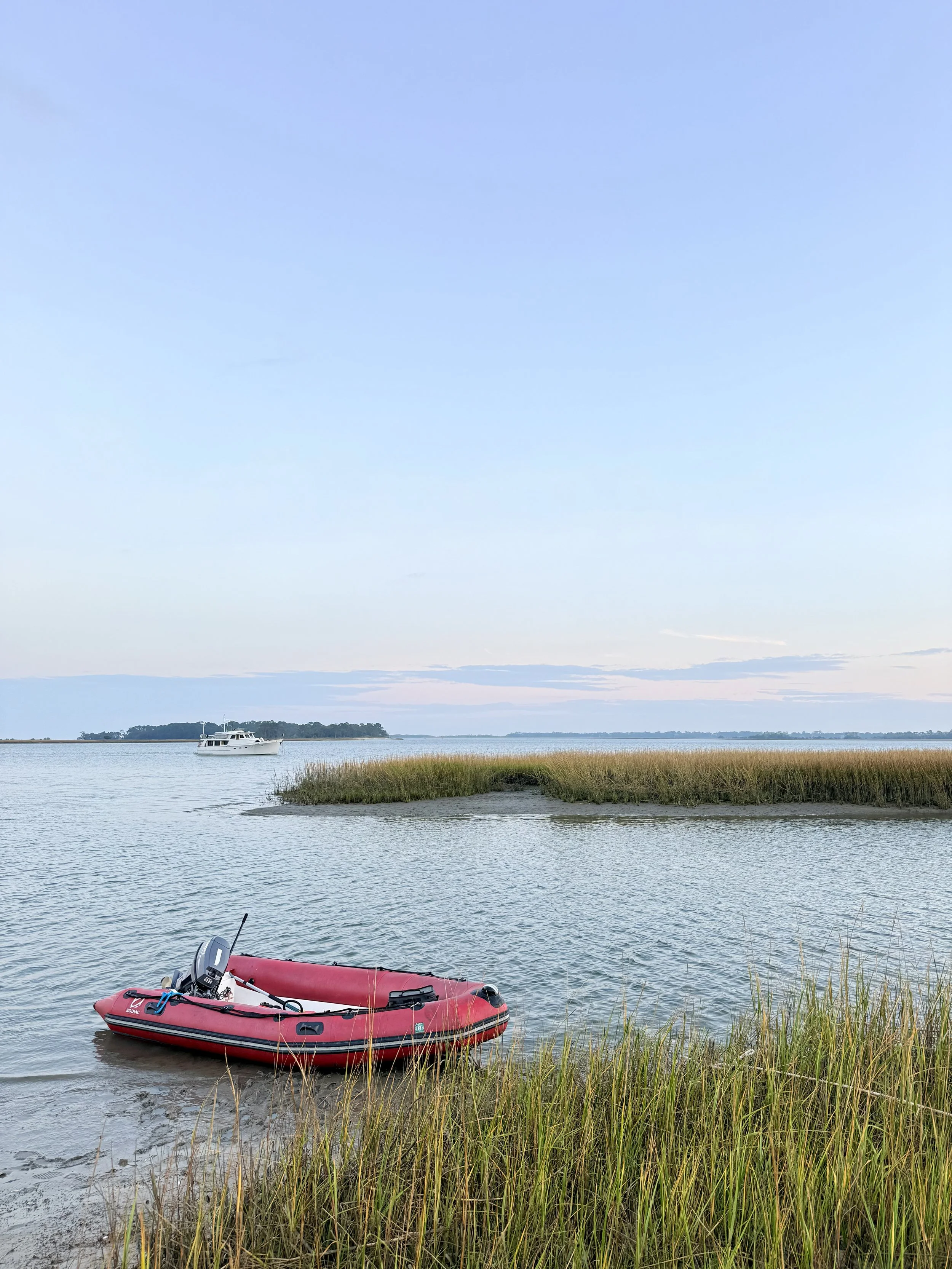
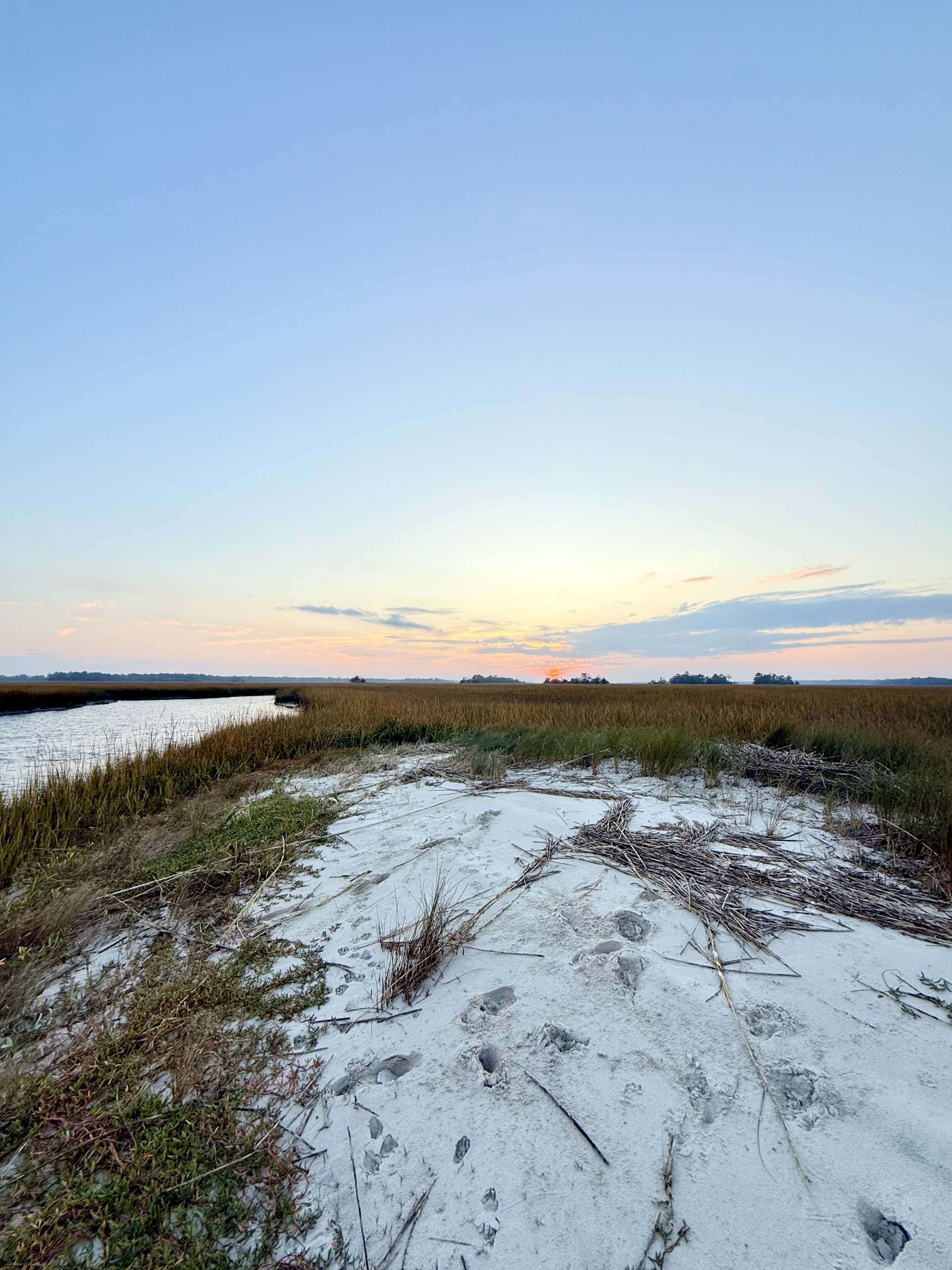
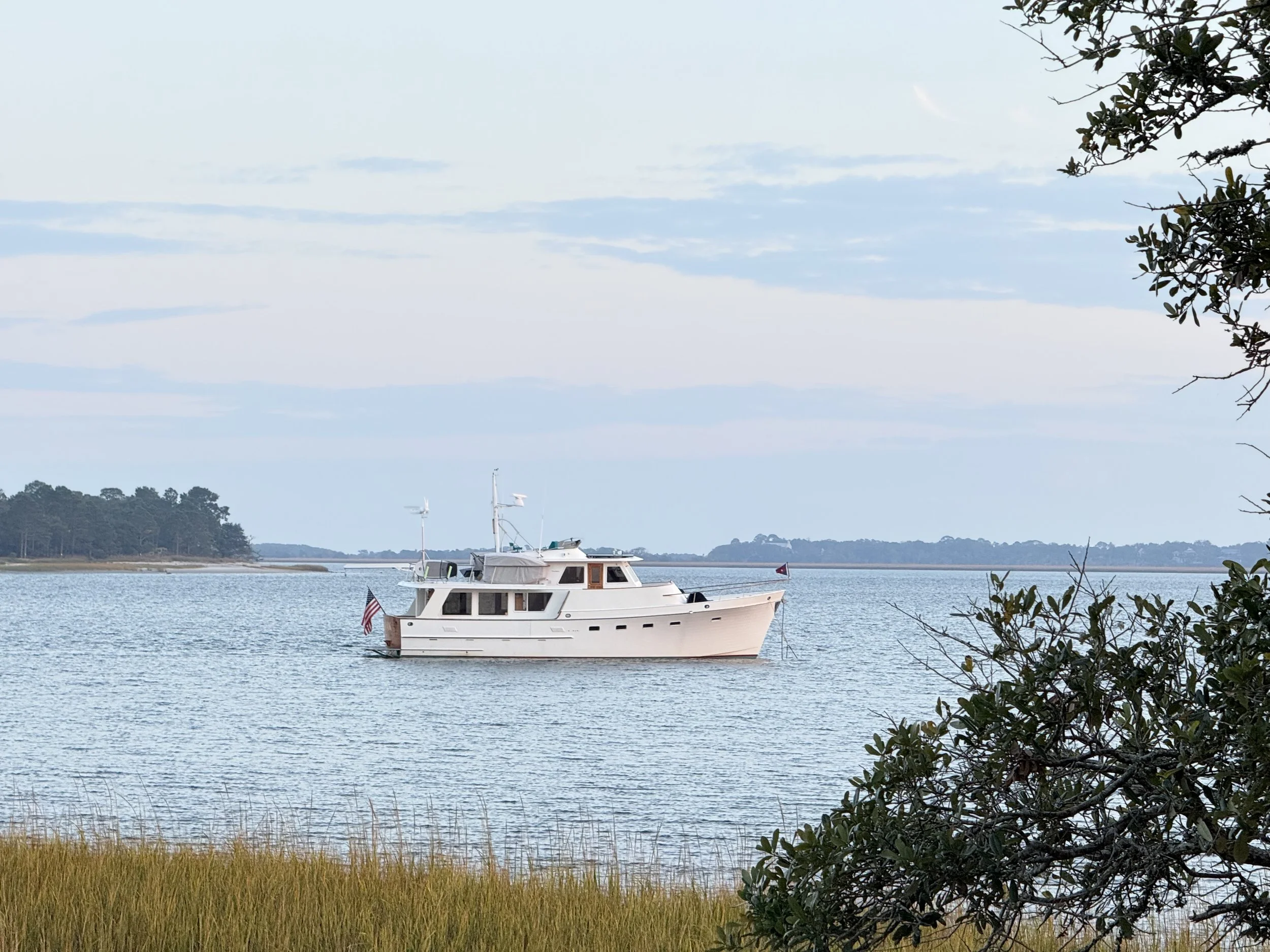
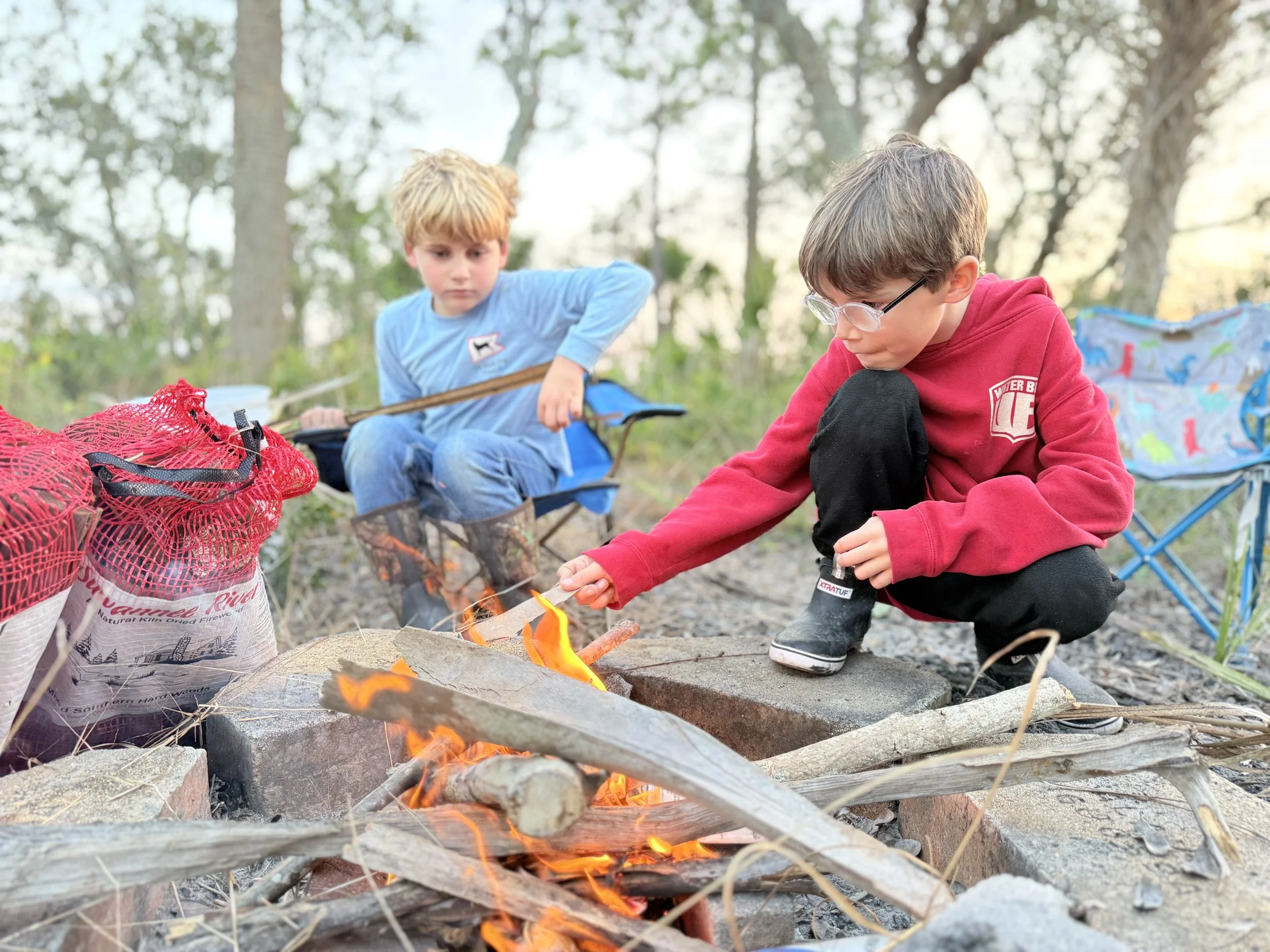
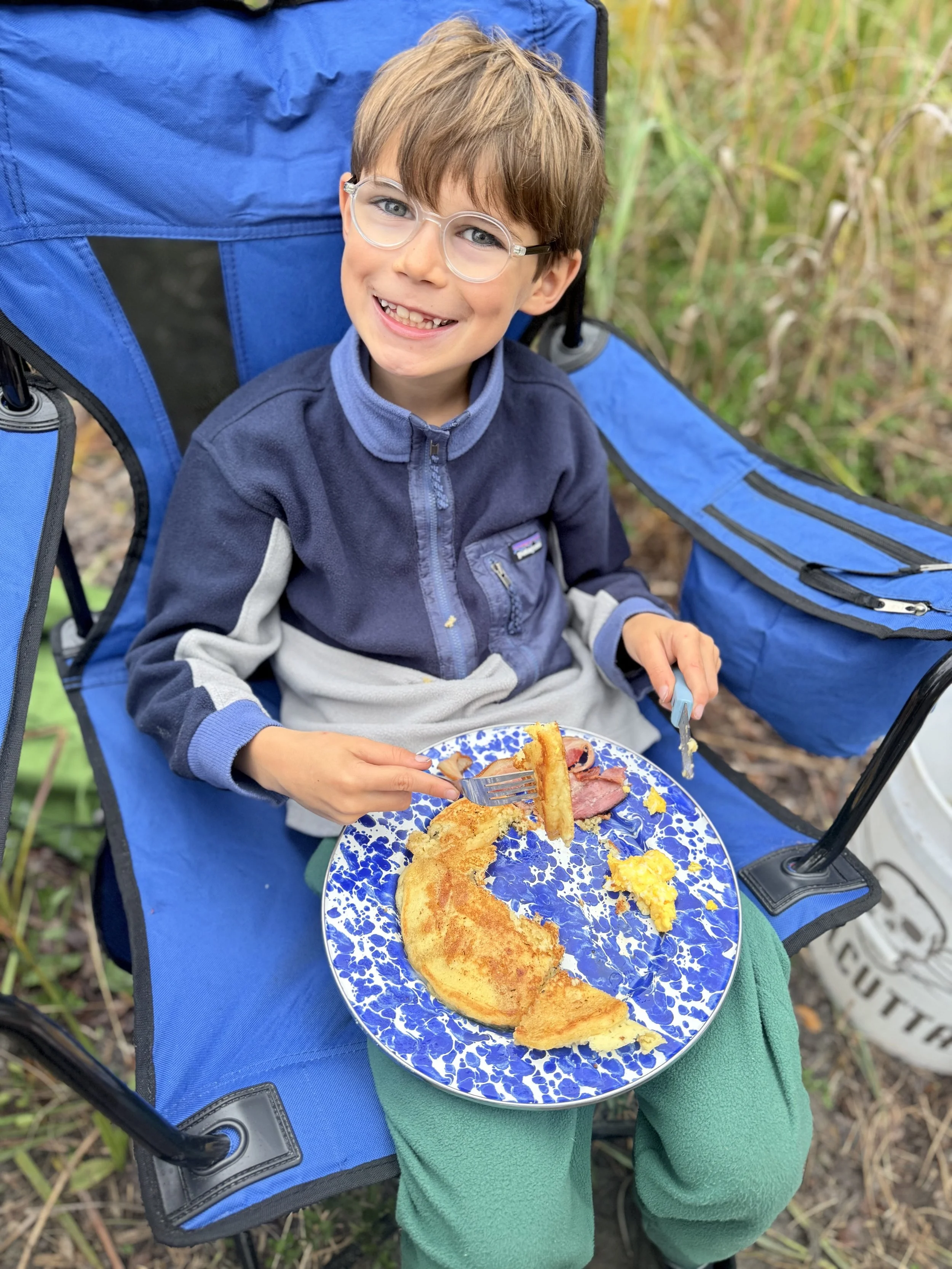
We anchored off the island and took the dinghy ashore to find a wonderfully simple campsite. Tents were pitched, a fire was started, a cooking stove assembled, and we explored oyster-covered shores and winding tidal marshes. It was truly a magical place.
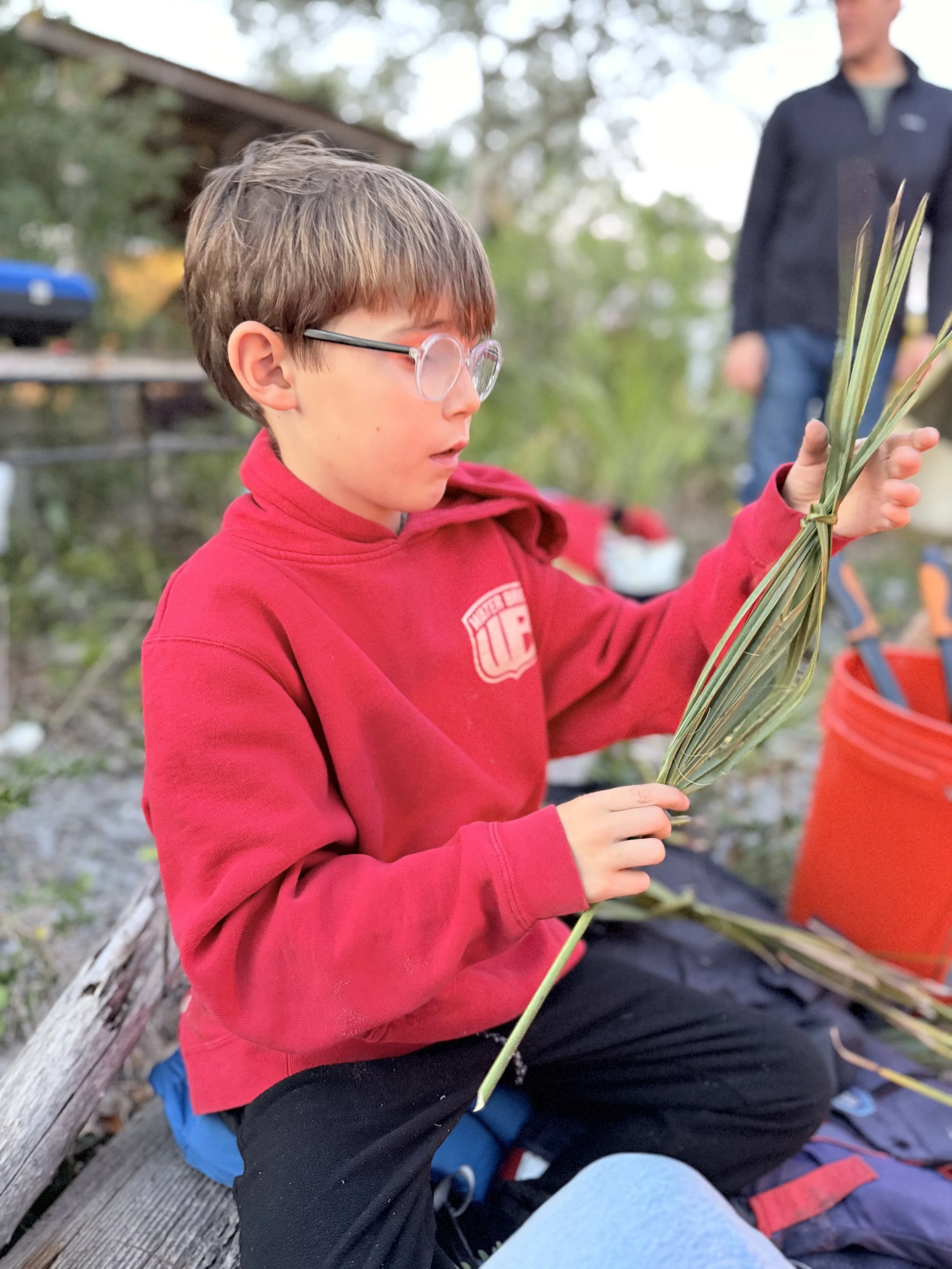
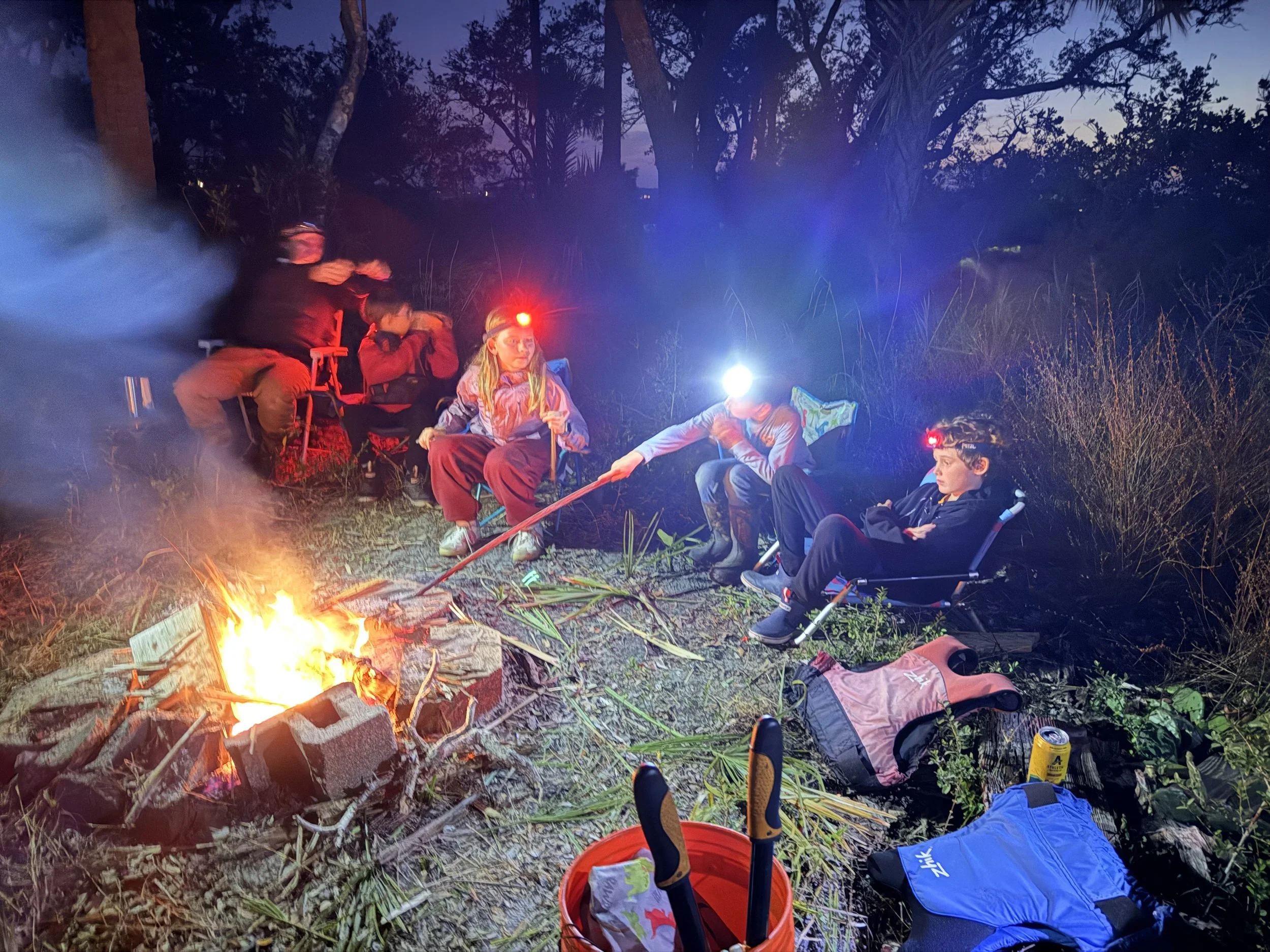
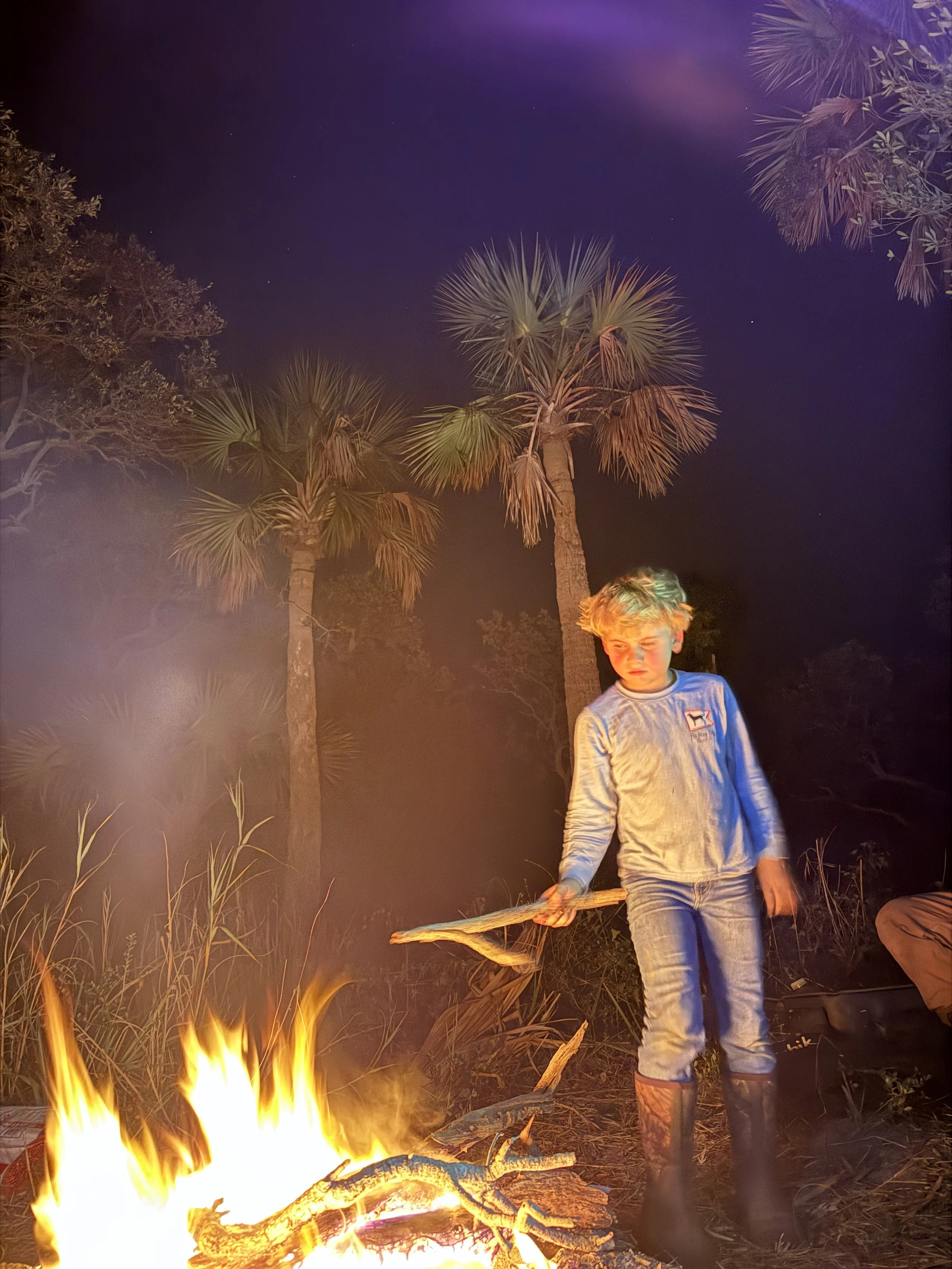
A Word About Conversations
There is a saying from an Eastern monk: “Speak only when your words are more beautiful than the silence.” Lately, I’ve been thinking a lot about conversations. What they do, and how they make us feel.
So many conversations today are wrapped in complaining, griping, or tearing others down. People pile on with agreement or their own stories of frustration, and by the time the conversation ends, everyone feels a little worse than when it began.
In contrast, conversations rooted in learning, about people, places, and ideas, are deeply enjoyable. Conversations that provoke thought, wonder, and deeper questions are nourishing. Our time at Cook’s Kitchen was full of exactly those conversations. Every discussion was thoughtful. Every exchange explored history, motivation, and meaning and how past events shaped the world we live in today.
Jaime and I shared a moment of profound pride as we sat by the fire listening to our two oldest kids, Ben and Walker, completely “nerd out” over World War II. Their conversation was insightful and meaningful. They challenged each other, learned from one another, and walked away better for it. We need more campfire conversations like that.
At daybreak, we enjoyed a wonderful breakfast, packed up camp, and carefully extinguished the remains of the fire before heading back up the river to Charleston. Once docked again at the Carolina Yacht Club, we cleaned up and prepared for our next southern experience. Our first-ever traditional Southern oyster roast at a local community sailing club.
The process was fascinating. Long plywood tables, piles of mesh gloves, oyster knives scattered about, and men hauling large metal baskets of freshly steamed oyster clusters. These were dumped unceremoniously onto the tables, where guests quickly got to work shucking and eating. Unlike Northern oysters, which come as singles, these arrived in irregular clusters. Empty shells were pushed toward holes in the tables, dropping into trash bins below. People slurped oysters, drank cold beer, and swapped stories.
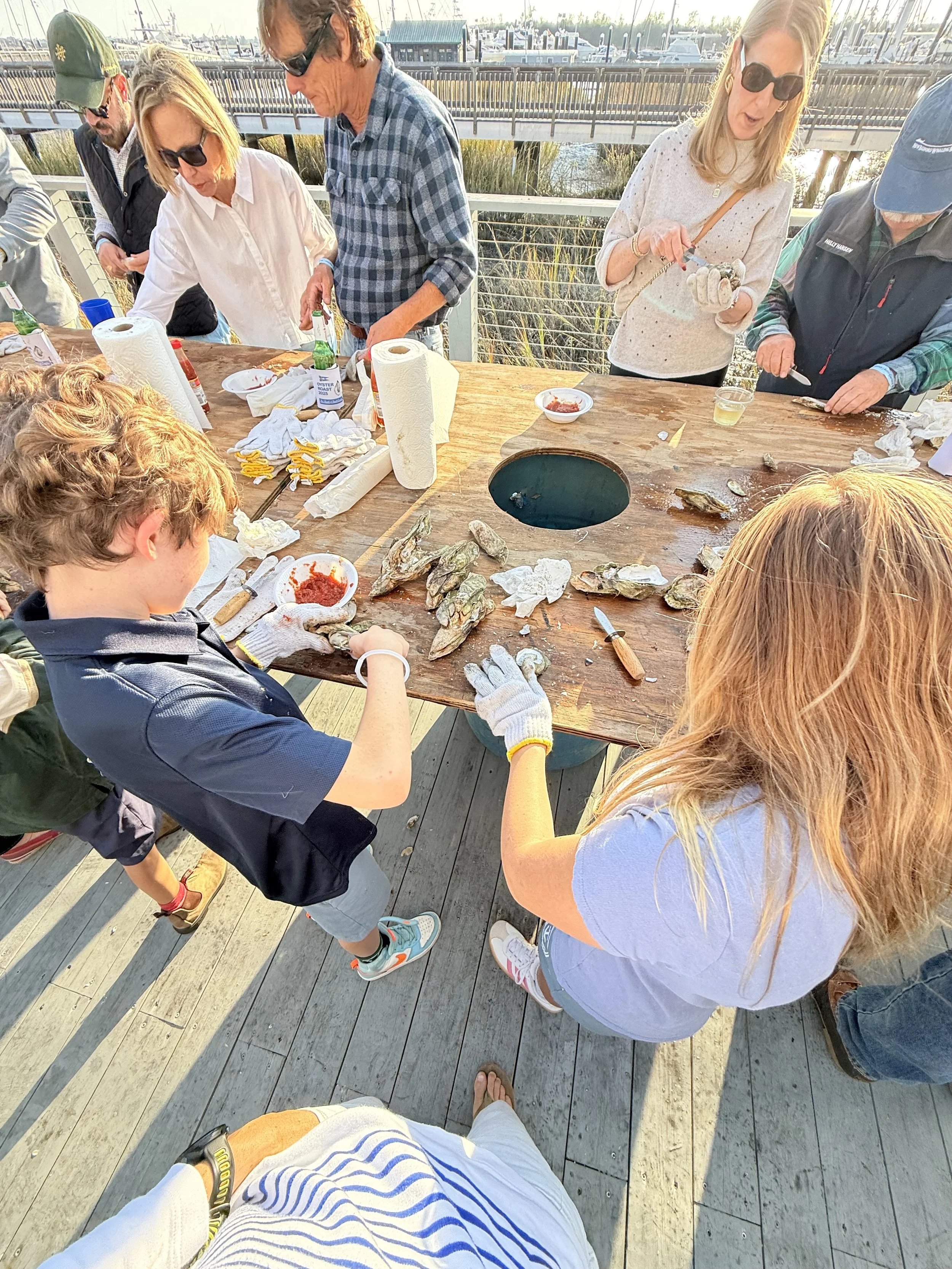
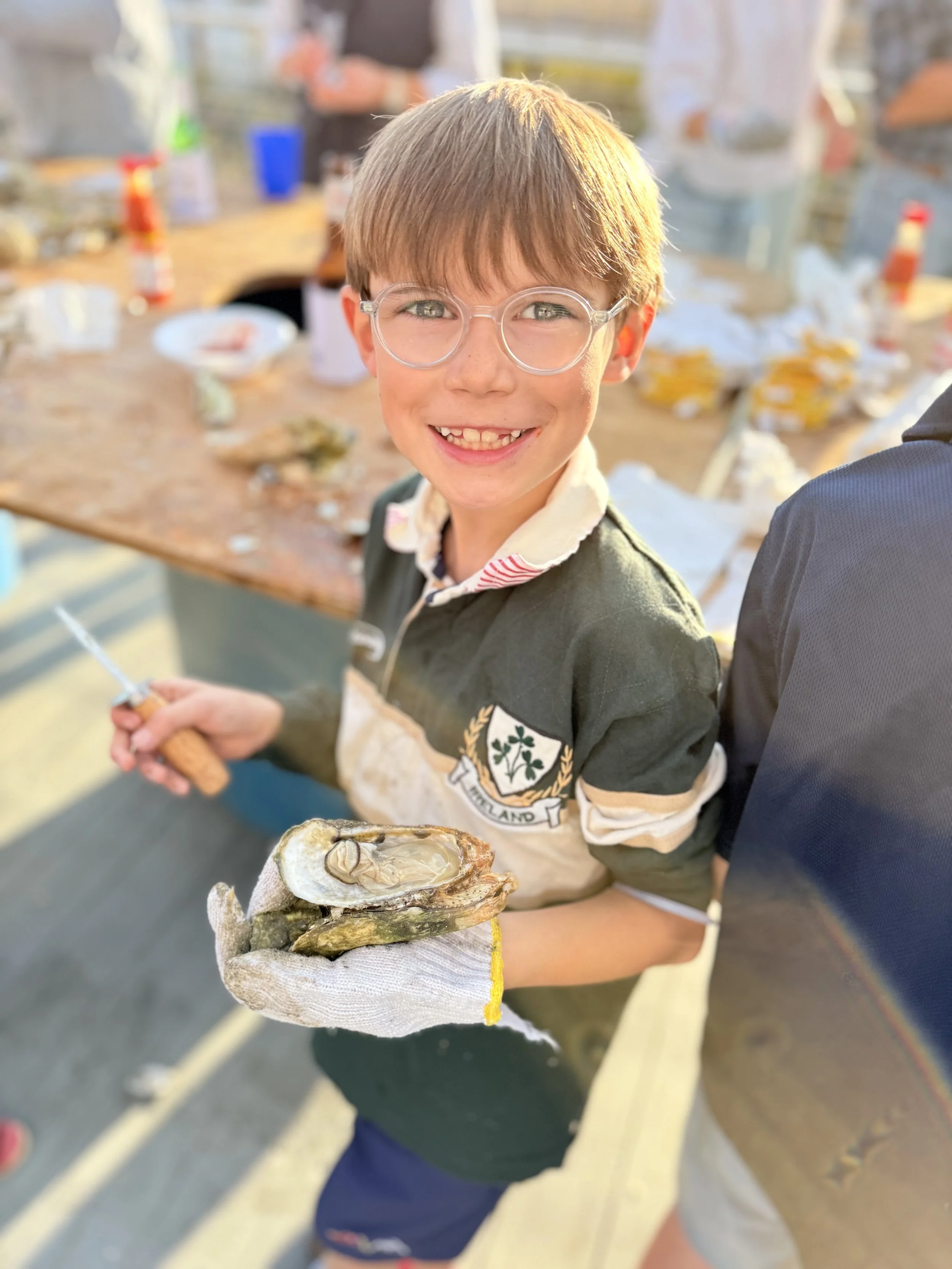
Little did the club know that Theo, aka Thuddy, is an oyster connoisseur. While my ticket was $70, I ate exactly two oysters, and don’t drink anymore (making the contribution essentially a donation), Theo consumed more oysters than three grown men combined. He left thrilled and deeply satisfied.
The next morning, we departed Charleston bound for Savannah, parting ways with friends and promises to return in the spring. There is still so much to see and learn in Charleston.
Not far down the ICW, we approached Daufuskie Island, part of what’s known as the Lowcountry, a region of extraordinary natural beauty. As I glanced at the chart, the name Daufuskie jumped out at me. I immediately thought of the Jimmy Buffett song Prince of Tides, which laments the overdevelopment of the island. Until that moment, I had never known where Daufuskie actually lay.
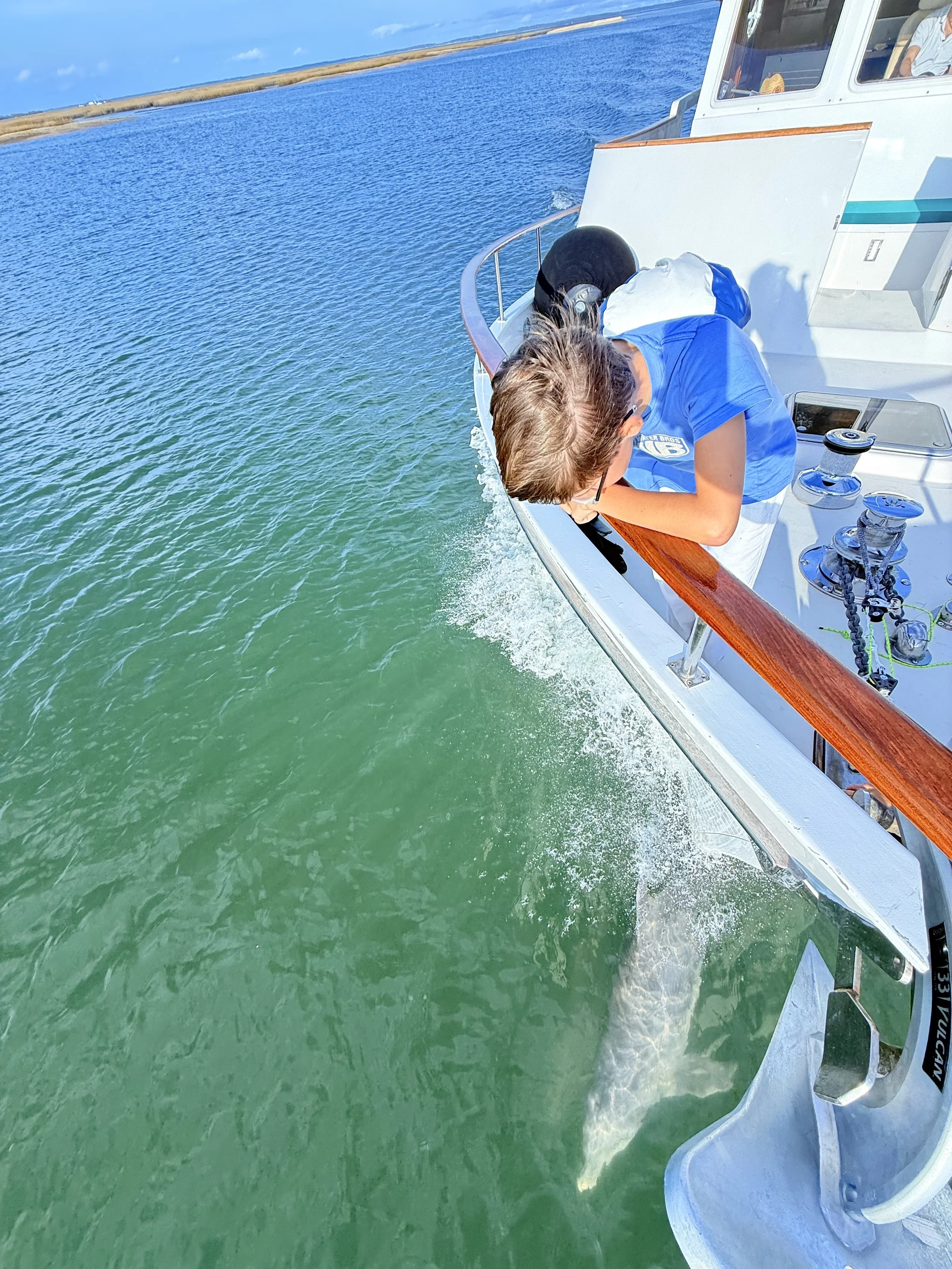
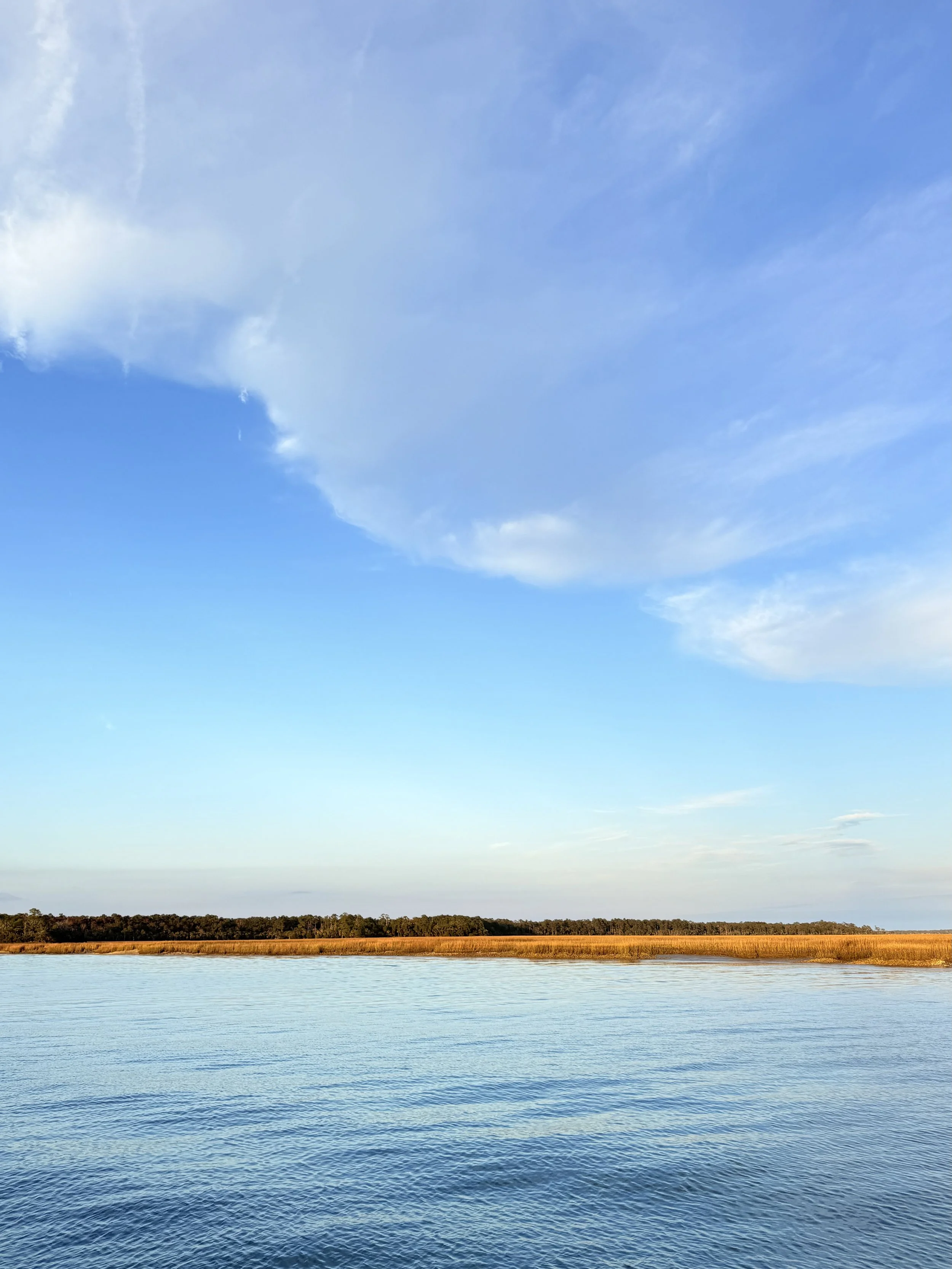
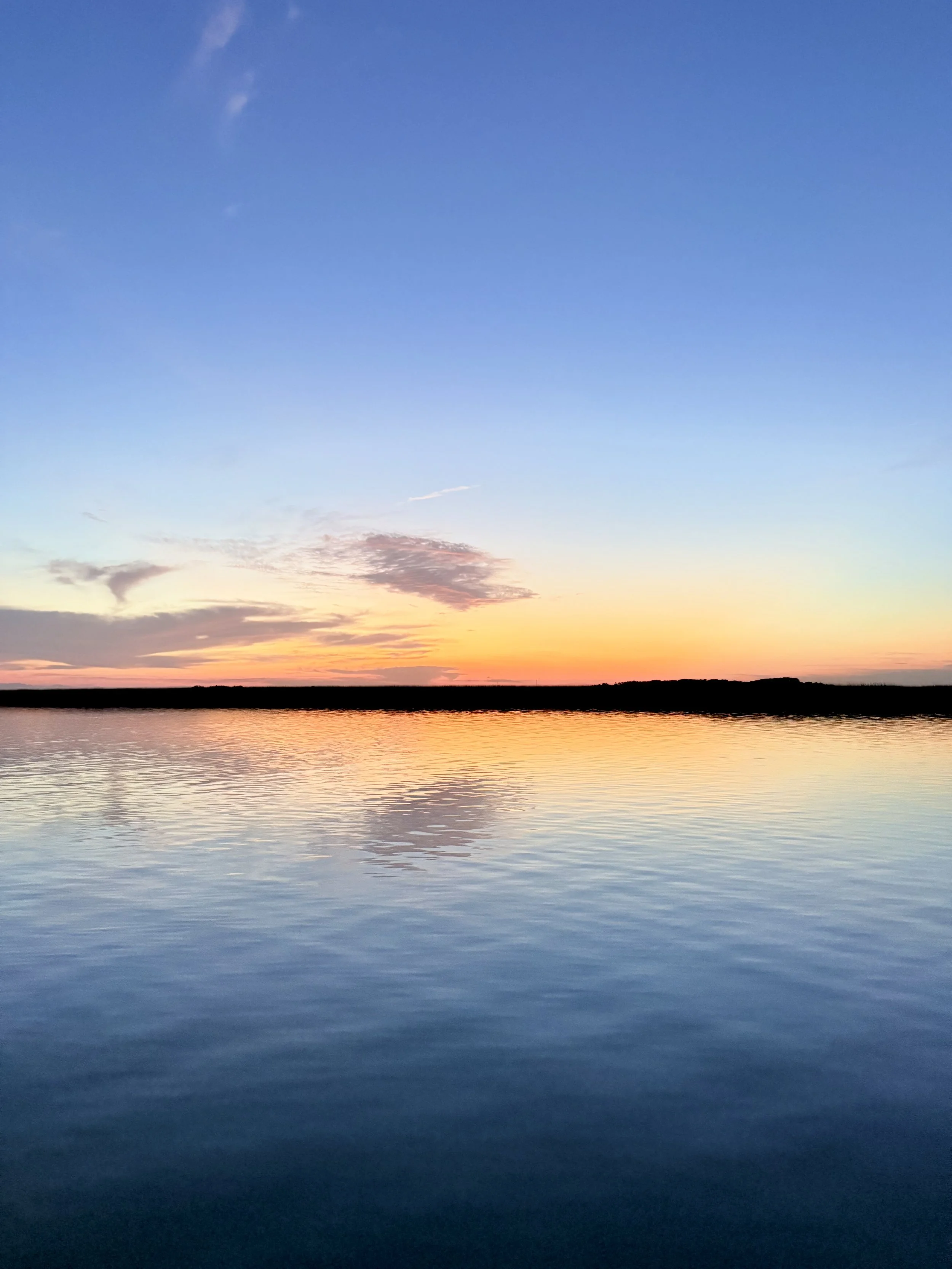
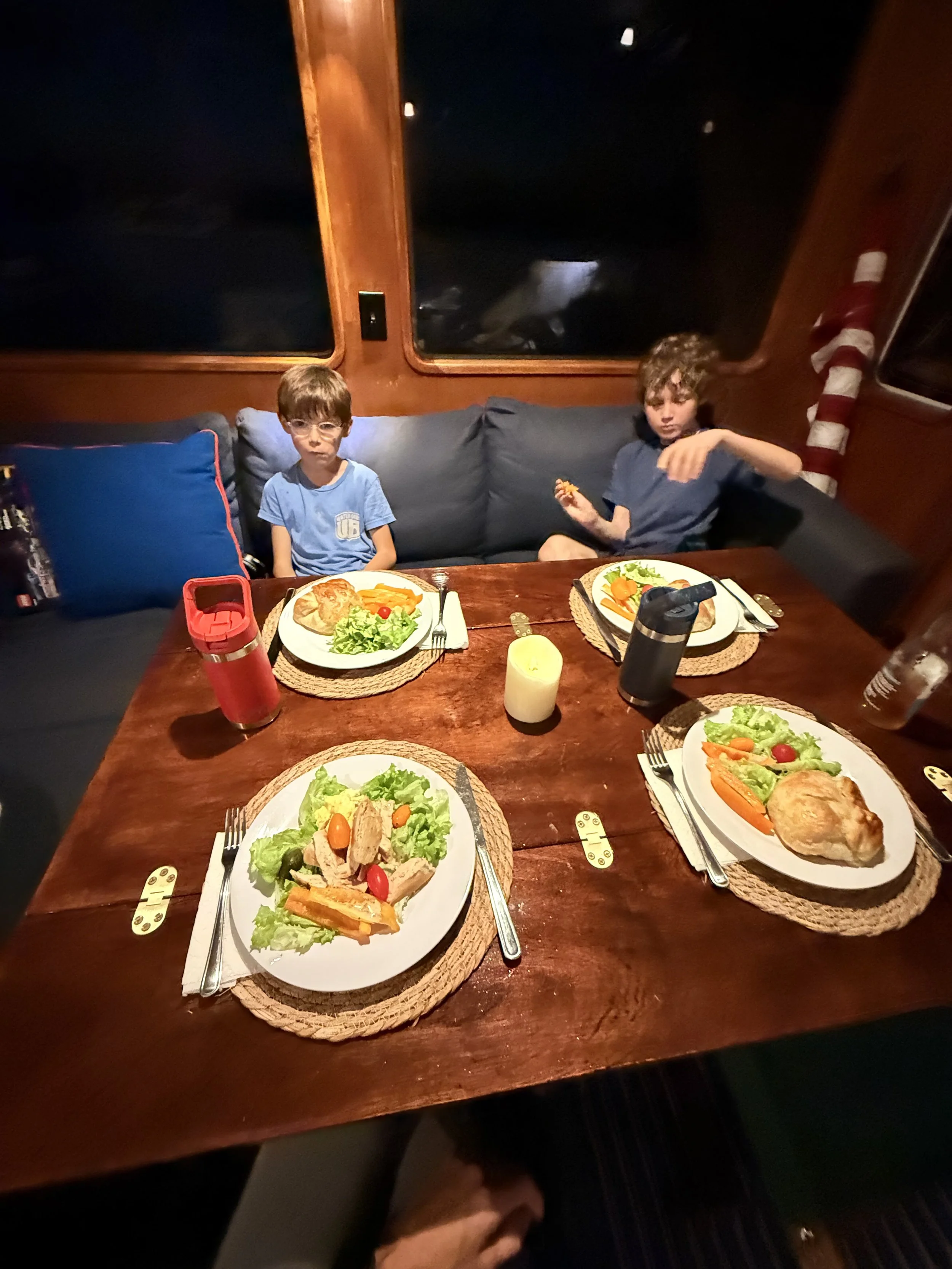
We found a quiet creek and anchored for the night. Dolphins swam all around us, clearly feeding on a nearby school of fish. I turned on the radio and played the Buffett song, and suddenly the lyrics took on a deeper meaning as the sun sank low in the western sky.
“The sun, red and enormous, began to sink into the western sky
and simultaneously the moon began to rise
On the other side of the river with its own glorious shade of red
Coming up out of the trees like a russet firebird
The sun and the moon seemed to acknowledge each other
And they moved in both apposition and concordance
In a breathtaking dance of light across the oaks and the palms”
As I watched the light fade, it dawned on me. We were at the intersection of two ecosystems. Northern oaks and pines stood side by side with palmetto palms, a perfect reflection of where we are in our journey: between North and South.
These few days were filled with history, nature, beauty, and wonder. And best of all, great friends.
More adventures to come.
-Adam
